
Food safety training is essential for businesses that prepare, handle, store, distribute or serve food in the UK. It helps employees understand how to handle food safely, prevent contamination, manage allergens and follow the food safety procedures required for their role.
UK food businesses have a responsibility to ensure that food handlers receive appropriate supervision, instruction and training in food hygiene and safety that is appropriate to their work activities. The Food Standards Agency (FSA) also states that staff who handle food should be trained in food hygiene and safety, including allergens, before they start work.
What Is Food Safety Training?
Food safety training teaches employees, supervisors and managers how to prevent food from becoming unsafe or unsuitable for consumption.
Training can cover everything from basic food hygiene for new food handlers to more advanced subjects such as HACCP, food safety management systems, allergen management and food safety legislation.
The level of training should be appropriate to the employee’s responsibilities and the type of food work they carry out. For example, a person preparing and cooking food may need a Level 2 course, while a supervisor or manager may require more advanced Level 3 training.
Food safety training can be delivered through:
- Online e-learning
- Classroom courses
- Live virtual training
- In-house training
- Blended learning
- Accredited qualifications
- Refresher training
It is also important to understand that UK food handlers do not necessarily have to hold a specific food hygiene certificate. The legal requirement is that food businesses ensure staff have appropriate training and supervision for their duties.
5 Top Food Safety Training Providers in the UK
There are many organisations providing food safety training in the UK. The following five providers offer different types and levels of food safety training for food handlers, supervisors, managers and businesses.
1. Aleido
Aleido is a strong option for organisations looking for flexible digital learning solutions for the food and beverage sector.
Aleido’s published off-the-shelf catalogue includes UK Food Safety Level 1, Level 2 and Level 3, as well as Food Allergies training. Its courses are available as digital learning and are designed to support organisations with scalable employee training.
Aleido also works specifically with organisations in the hospitality, food and beverage sector, where food safety and quality regulations are identified as important business challenges.
Why choose Aleido?
- Food Safety Level 1, 2 and 3 courses.
- Food allergy training available.
- Flexible online learning.
- Suitable for different employee roles and levels.
- Responsive digital courses suitable for modern workplaces.
- Ready-made courses can be deployed quickly.
- Content can support large-scale employee training.
- Bespoke e-learning and blended learning solutions are also available.
- Experience working with hospitality, food and beverage organisations.
Aleido hospitality and food safety training is particularly suitable for businesses looking for a scalable digital training solution that can be delivered consistently across multiple employees, locations or departments.
2. Chartered Institute of Environmental Health (CIEH)
CIEH offers food safety training at different levels, including Level 1, Level 2 and Level 3 certificates.
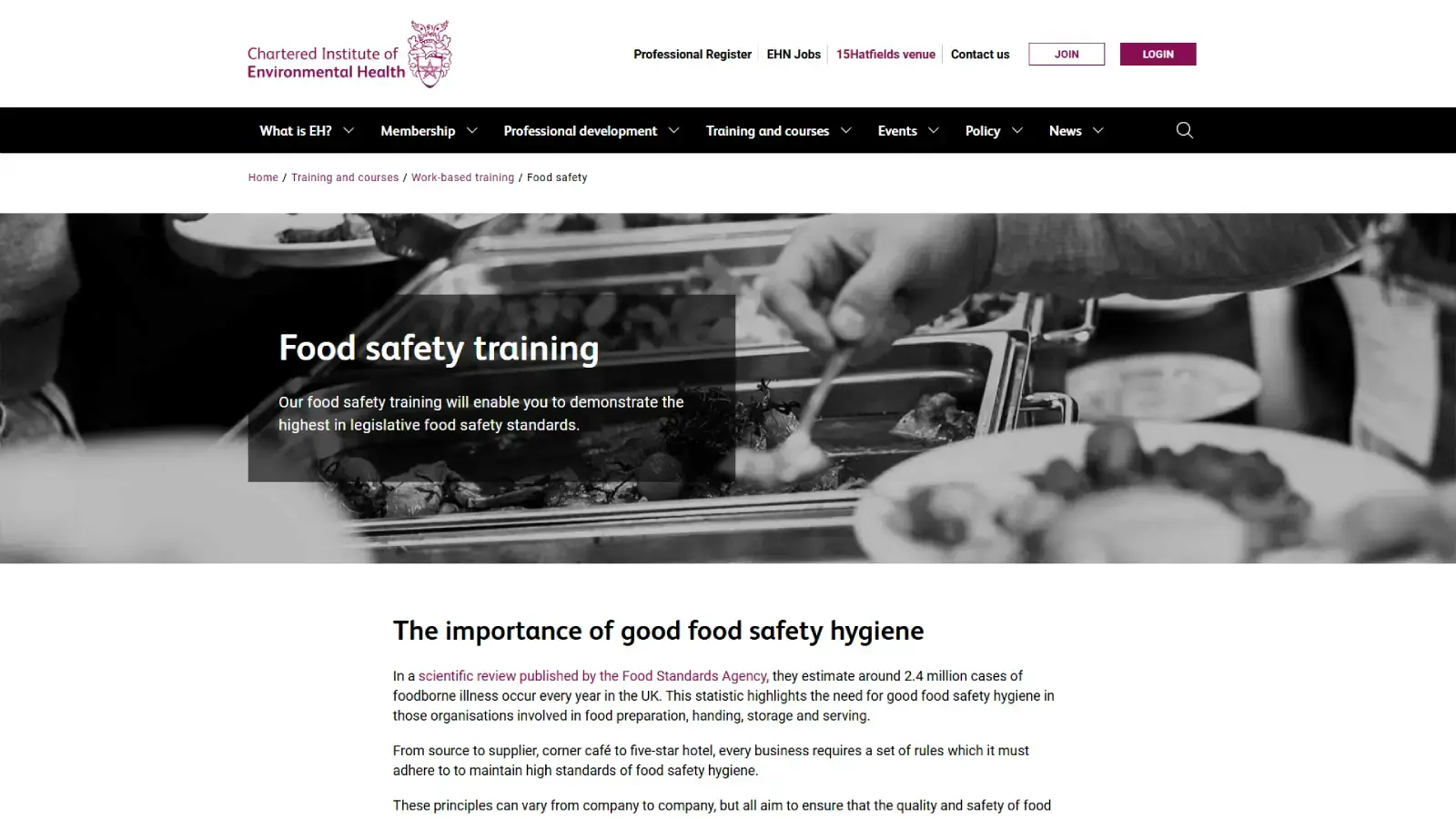
Its Level 2 Foundation Certificate is designed for people working in food businesses, including food handlers who prepare or cook food. The Level 3 Intermediate Certificate is aimed at managers and supervisors.
Why choose CIEH?
- Training designed by food safety subject-matter experts.
- Level 1, Level 2 and Level 3 options.
- Suitable for food handlers, supervisors and managers.
- Training complements FSA food safety guidance.
- Suitable for businesses looking to develop food safety competence.
- CIEH has accredited food qualification providers across the UK.
CIEH can be a good choice for organisations looking for structured food safety training at different levels of responsibility.
Chartered Institute of Environmental Health (CIEH)
3. Highfield
Highfield is a major UK awarding organisation offering regulated food safety qualifications from Level 1 through Level 4.
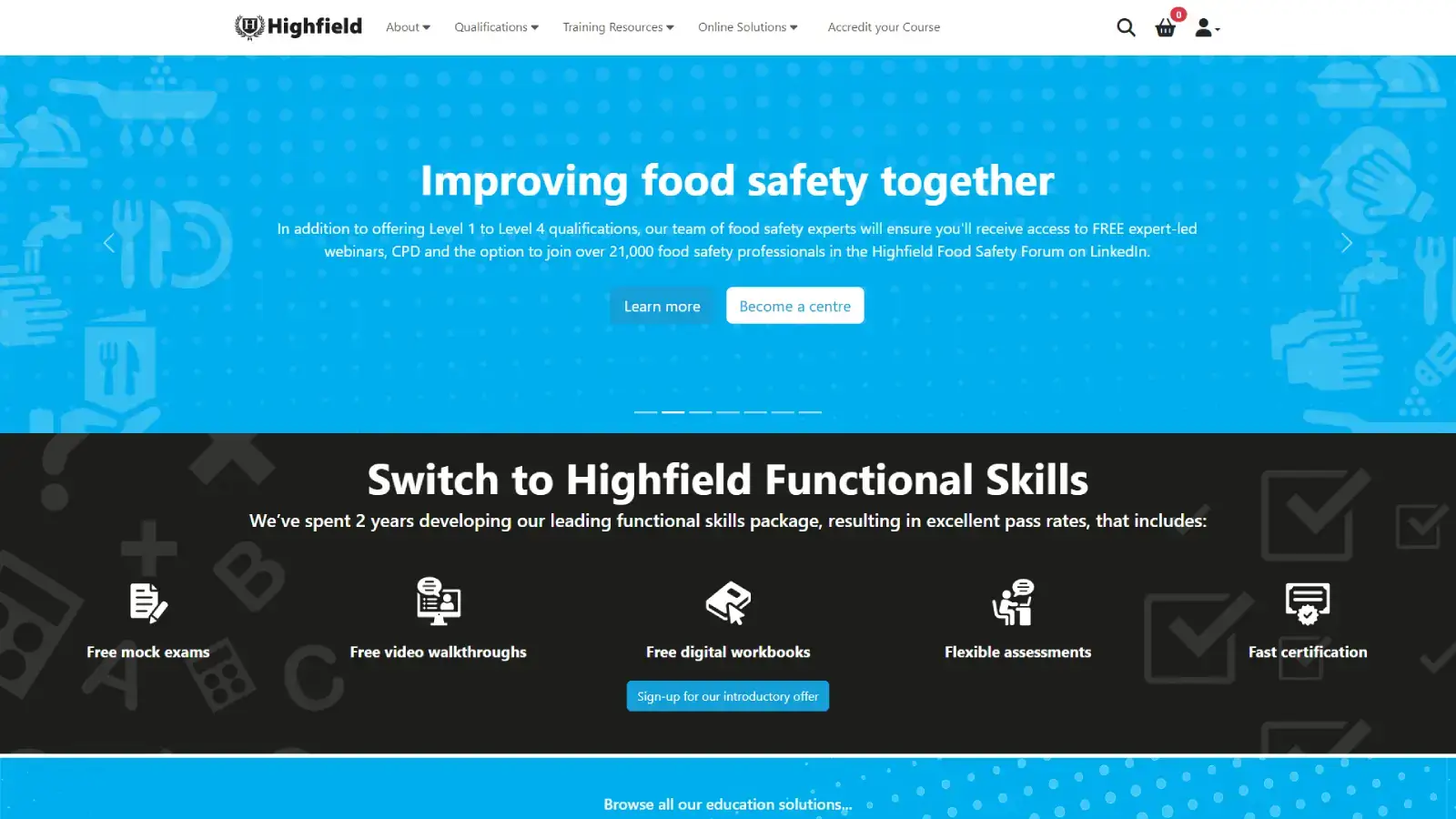
Highfield’s food safety training covers areas such as food safety hazards, microbiology, food safety law, contamination, cleaning and disinfection, personal hygiene and HACCP.
Why choose Highfield?
- Food safety qualifications from Level 1 to Level 4.
- Courses for food handlers, supervisors and managers.
- Strong focus on practical food safety.
- Covers food safety legislation and HACCP.
- Online learning options are available.
- Recognised qualifications through approved centres.
- Suitable for businesses with different levels of food safety responsibility.
Highfield is particularly useful for organisations that want recognised food safety qualifications and progression from basic training through to management-level learning.
Highfield
4. NSF
NSF provides food safety training for people working in food manufacturing, catering and other food-related environments.
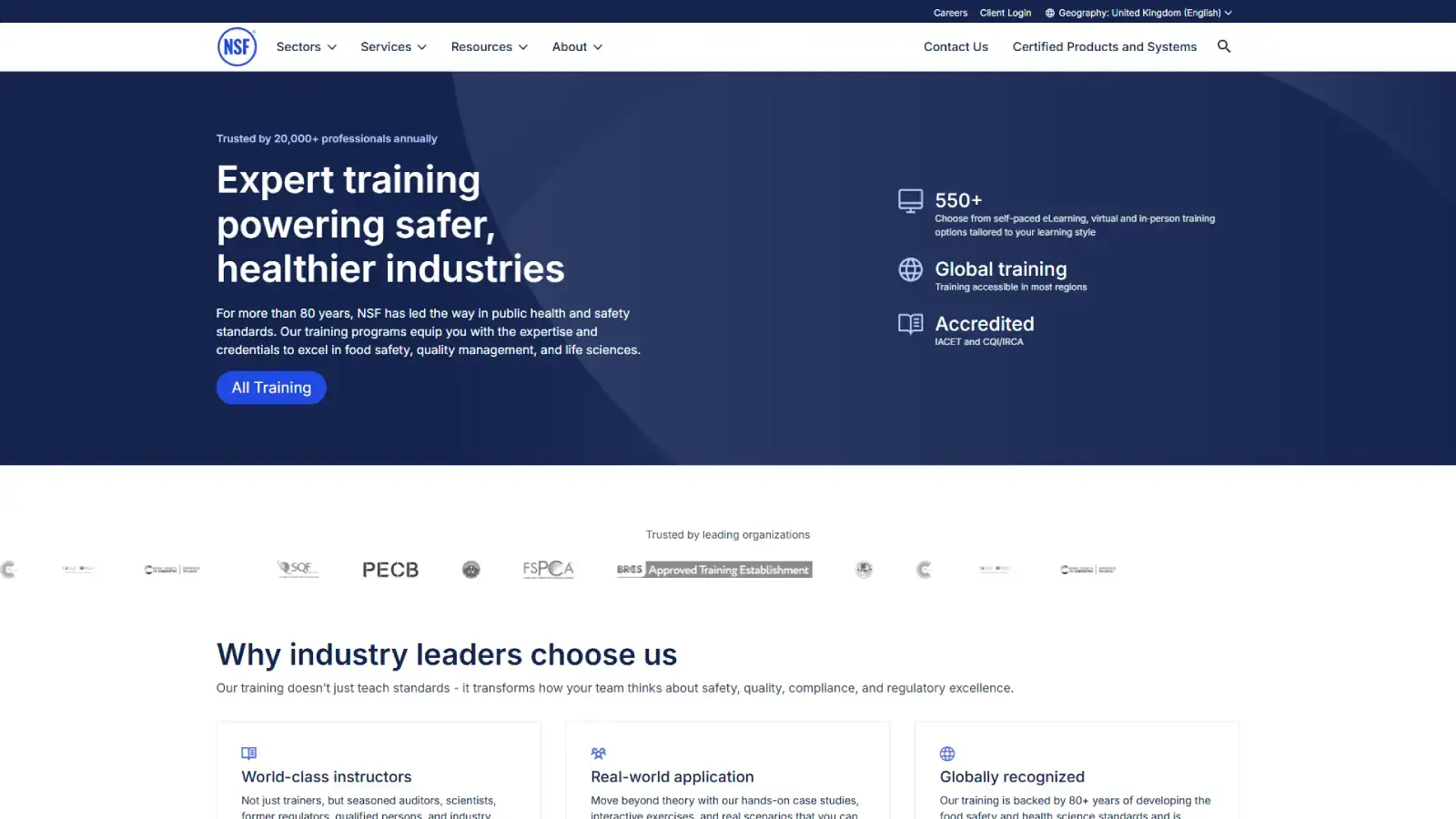
Its Highfield Food Safety Level 2 course covers food safety hazards, microbiological hazards, food safety law, contamination controls, cleaning and disinfection, personal hygiene and HACCP.
NSF also offers Level 3 food safety training for supervisors and managers, covering areas such as food poisoning, contamination control, premises and equipment, cleaning, pest management, HACCP and food safety legislation.
Why choose NSF?
- Food safety training for different roles.
- Level 2 and Level 3 options.
- Online self-paced learning available.
- Covers food law, HACCP and contamination.
- Suitable for food handlers, supervisors and managers.
- Group training options can be useful for organisations.
NSF can be a suitable choice for businesses that want structured online food safety training combined with recognised Highfield qualifications.
NSF training
5. Food Alert
Food Alert provides food safety training and consultancy services, including Highfield food safety qualifications.
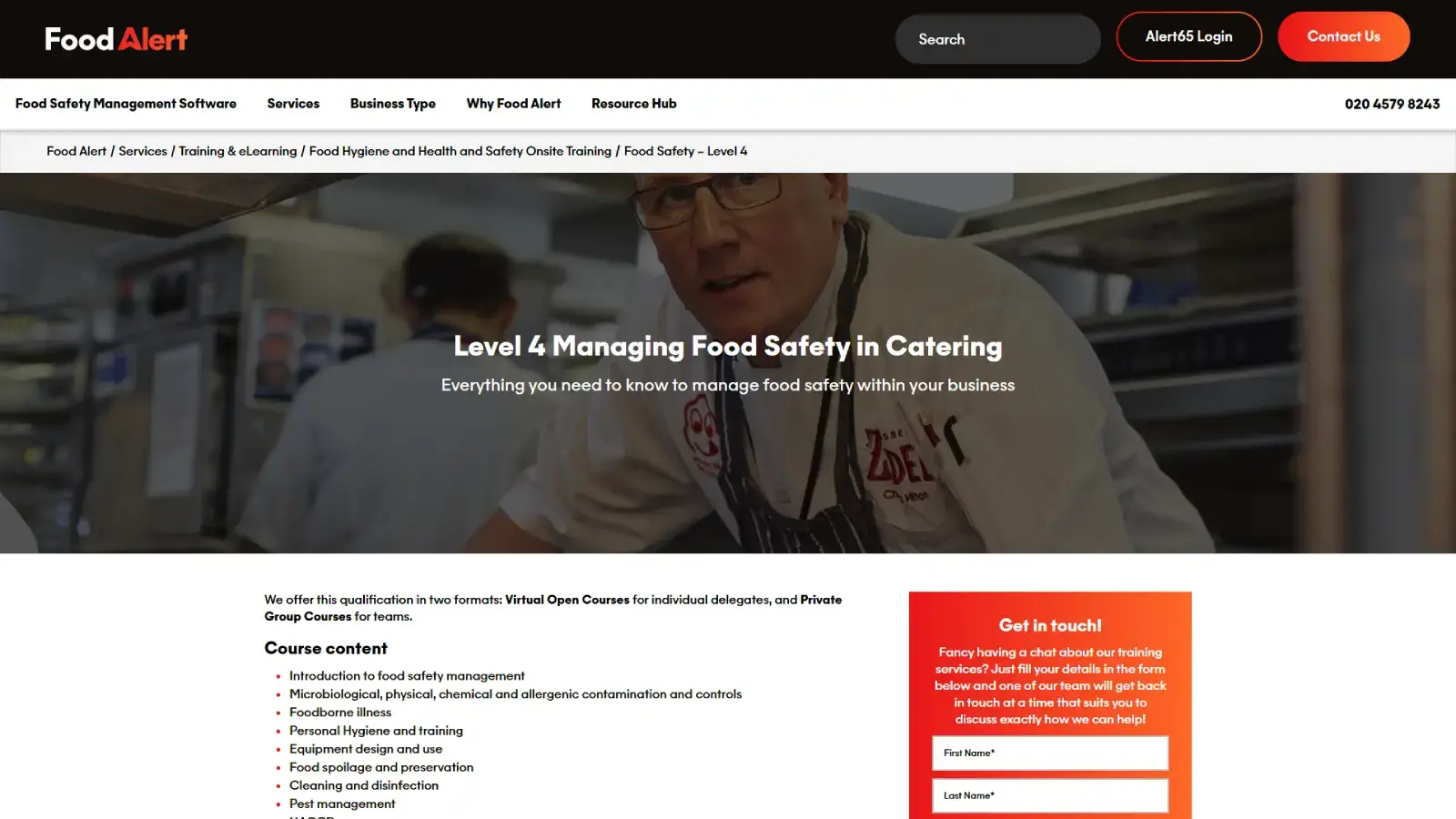
Its Level 4 Food Safety course covers food safety management, microbiological, physical, chemical and allergenic contamination, foodborne illness, personal hygiene, cleaning and disinfection, pest management, HACCP and legislation.
Why choose Food Alert?
- Specialist focus on food safety.
- Level 3 and Level 4 food safety training.
- Virtual and private group courses.
- Training delivered by qualified food safety instructors.
- Covers HACCP and food safety legislation.
- Suitable for managers and senior food safety personnel.
- Private training can be tailored to an organisation’s needs.
Food Alert can be particularly useful for organisations requiring more advanced food safety management training or support for teams.
Food Alert
Why Is Food Safety Training Important for UK Businesses?
Food safety training is important because poor food hygiene can lead to food poisoning, allergic reactions, contamination, product recalls, enforcement action and reputational damage.
Key benefits include:
- Protecting customers: Training helps employees prepare and serve food safely.
- Preventing foodborne illness: Staff learn how to control microbiological, chemical, physical and allergenic hazards.
- Managing allergens: Employees need to understand allergen information and prevent allergen cross-contamination.
- Meeting legal responsibilities: Food businesses must provide appropriate food hygiene training and supervision.
- Improving food hygiene standards: Training helps establish consistent procedures throughout the business.
- Supporting HACCP systems: Employees need to understand the food safety controls relevant to their responsibilities.
- Reducing contamination: Good hygiene practices help prevent cross-contamination between raw and ready-to-eat foods.
- Protecting business reputation: Maintaining high food safety standards helps businesses maintain customer confidence.
The FSA highlights personal hygiene, cooking, cleaning, chilling and avoiding cross-contamination as important areas of food hygiene for businesses.
What Topics Are Generally Covered in Food Safety Training?
The exact content depends on the course level, industry and employee responsibilities. However, most food safety training programmes cover several core areas.
1. Food Safety Hazards
Employees learn about the main types of hazards that can make food unsafe, including:
- Microbiological hazards
- Physical hazards
- Chemical hazards
- Allergenic hazards
- Cross-contamination
- Foodborne pathogens
Understanding these hazards helps employees recognise where food safety problems can occur and how to control them. Highfield Level 2 training, for example, covers microbiological hazards, contamination hazards and food safety controls.
2. Personal Hygiene
Personal hygiene is a fundamental part of food safety training.
Topics may include:
- Effective handwashing
- Clean protective clothing
- Personal cleanliness
- Reporting illness
- Cuts and wounds
- Appropriate behaviour in food preparation areas
- Preventing contamination from food handlers
3. Cross-Contamination
Training commonly explains how contamination can spread between food, people, equipment and surfaces.
Employees may learn about:
- Separating raw and ready-to-eat foods.
- Using appropriate utensils and equipment.
- Cleaning and disinfecting surfaces.
- Safe food storage.
- Hand hygiene.
- Preventing allergen cross-contact.
The FSA specifically identifies avoiding cross-contamination as one of the basic food hygiene principles businesses should follow.
4. Temperature Control
Temperature control is important for preventing the growth of harmful microorganisms.
Training may cover:
- Safe cooking temperatures.
- Chilling and refrigeration.
- Freezing.
- Hot holding.
- Cooling cooked food.
- Temperature monitoring.
- Safe storage.
The FSA’s HACCP guidance identifies temperature control as an important prerequisite where relevant to the food operation.
5. Food Storage
Employees may be taught how to store food safely, including:
- Correct refrigeration.
- Freezer storage.
- Dry storage.
- Stock rotation.
- Use-by and best-before dates.
- Separation of raw and ready-to-eat foods.
- Protecting food from contamination.
6. Cleaning and Disinfection
Food safety training generally explains the difference between cleaning and disinfection and how both should be used effectively.
Topics can include:
- Cleaning schedules.
- Cleaning food-contact surfaces.
- Correct use of cleaning products.
- Equipment cleaning.
- Waste management.
- Preventing contamination during cleaning.
7. Pest Control
Food businesses need appropriate controls to prevent pests from contaminating food.
Training may cover:
- Identifying signs of pest activity.
- Preventing pest access.
- Safe waste management.
- Maintaining premises.
- Reporting pest problems.
- Working with pest-control contractors.
Pest control is identified by the FSA as one of the food hygiene prerequisites businesses should consider.
8. Food Allergens
Allergen management is an increasingly important part of food safety training.
Employees should understand:
- The 14 regulated allergens.
- Allergen ingredients.
- Cross-contamination and cross-contact.
- Providing accurate allergen information.
- Handling customer allergen questions.
- Preparing allergen-free meals safely.
- Food labelling requirements.
The FSA states that food businesses must ensure staff receive training on allergens and must provide customers with information about the regulated allergens present in food.
9. HACCP and Food Safety Management
HACCP stands for Hazard Analysis and Critical Control Point. It is a systematic approach to identifying and controlling food safety hazards.
Training may cover:
- Identifying potential hazards.
- Conducting a hazard analysis.
- Establishing control measures.
- Identifying Critical Control Points (CCPs).
- Establishing critical limits.
- Monitoring controls.
- Corrective actions.
- Verification and review.
- Keeping appropriate records.
The FSA’s MyHACCP system is designed to help food businesses develop food safety management systems based on HACCP principles.
10. Food Safety Legislation
Food safety courses commonly introduce employees and managers to the legislation relevant to their activities.
Training can help staff understand their responsibilities and the importance of following the food safety management procedures established by their employer.
Relevant UK Food Safety Legislation
Food businesses should ensure their training reflects the legislation applicable to their activities and location. Key legislation includes the following.
Food Safety Act 1990
The Food Safety Act 1990 provides an important legal framework for food safety in Great Britain. It covers matters including the safety, quality and description of food.
The Food Standards Agency provides guidance for food businesses on the Food Safety Act 1990.
Food Hygiene Regulations 2006
The Food Hygiene Regulations 2006 establish hygiene requirements for food businesses in England, Wales and Northern Ireland through the relevant legislation for each jurisdiction.
Food businesses must ensure that food handlers receive appropriate supervision, instruction and/or training in food hygiene matters appropriate to their work activities.
Retained Regulation (EC) No. 852/2004 on the Hygiene of Foodstuffs
This legislation establishes general hygiene requirements for food businesses and includes requirements relating to food handlers, hygiene practices and HACCP-based food safety management.
The FSA’s MyHACCP guidance explains that HACCP-based food safety management systems are required under retained EU food hygiene rules.
Food Information Regulations 2014
The Food Information Regulations 2014 are particularly relevant to food labelling and allergen information.
Training may help staff understand how to provide accurate allergen information for customers and how allergen information requirements apply to different types of food.
The FSA identifies 14 regulated allergens that food businesses must declare when applicable.
General Food Law
General food law covers important principles relating to food safety, traceability and the responsibilities of food businesses.
Food businesses should ensure that food placed on the market is safe and that appropriate procedures are in place to identify and control food safety risks.
Food Safety and Hygiene Requirements in Northern Ireland
Businesses operating in Northern Ireland should check the legislation applicable specifically to Northern Ireland. The FSA provides separate guidance, including the Food Safety (Northern Ireland) Order 1991.
Choosing the Right Food Safety Training
The right course depends on the type of food business, the employee’s responsibilities and the risks involved.
Businesses should consider:
- Whether employees prepare, cook, serve, transport or manufacture food.
- The level of risk associated with the food activities.
- Whether employees work directly with food.
- Whether employees need allergen training.
- Whether supervisors or managers require advanced training.
- Whether HACCP responsibilities are part of the role.
- Whether an accredited qualification is required.
- Online, classroom or blended learning requirements.
- Refresher training and ongoing competency.
- Keeping appropriate training records.
For example, a new food handler may require introductory or Level 2 food safety training, while a supervisor or manager may benefit from Level 3 training. More senior food safety professionals may require Level 4 training or specialist qualifications.
The FSA recommends keeping records of staff training so businesses can demonstrate their training arrangements to authorised officers when required.
Summary
Food safety training is an important part of running a compliant and responsible food business in the UK. It helps employees understand food hygiene, prevent contamination, manage allergens, control temperatures and follow HACCP-based procedures.
For businesses looking for flexible digital learning, Aleido is a strong option, with published UK Food Safety Level 1, Level 2 and Level 3 courses and Food Allergies training.
Other established options include CIEH, Highfield, NSF and Food Alert, each offering different levels and formats of food safety training.
Before selecting a course, businesses should assess the actual food safety risks within their operations and choose training that is appropriate for each employee’s role and level of responsibility.
Note: Food safety legislation and enforcement arrangements can differ between England, Wales, Scotland and Northern Ireland. Businesses should check the requirements applicable to the part of the UK in which they operate.