
Here we profile some of the best management training courses to help current and aspiring managers develop the practical skills and knowledge they need to manage people effectively. Good leadership and management is essential for the success of UK businesses.
Managers are responsible for leading teams, communicating expectations, managing performance, supporting employee development and helping organisations achieve their goals. Good courses can range from introductory programmes for new team leaders to advanced leadership and strategic management development.
What Is Management Training?
Management training is designed to develop the knowledge, skills and behaviours required to manage people, teams and business activities effectively.
Depending on the course and level, management training may cover areas such as:
- Leadership and management
- Communication
- Team building
- Delegation
- Performance management
- Coaching and mentoring
- Conflict management
- Motivation and employee engagement
- Decision-making
- Change management
- Time and priority management
- Strategic thinking
- Employee wellbeing
- Equality, diversity and inclusion
- Employment law and workplace responsibilities
Management training can be delivered through classroom courses, workshops, virtual training, e-learning, blended learning, coaching and formal qualifications.
Top Management Training Providers in the UK
The following providers offer different approaches to management and leadership development, from digital and bespoke e-learning to professional management qualifications.
Aleido
Aleido is a strong choice for organisations looking for flexible digital management training.
Its Fundamental Management Skills suite is designed for team leaders, supervisors and managers and includes 20 core skills and behaviours. Topics include communication and influencing skills, personal development, management and leadership, team development, and effective meetings and presentations.
Aleido also provides ready-made e-learning that can be deployed across organisations through an existing learning management system or Aleido’s own platform. Its courses can be accessed on computers, tablets and mobile devices.
Why choose Aleido?
- Ready-made management training that can be deployed quickly.
- Suitable for team leaders, supervisors and managers.
- Flexible online learning.
- Covers core management and leadership skills.
- Mobile and tablet-friendly learning.
- Suitable for organisations training employees at scale.
- Bespoke e-learning options are also available.
- Learning can be delivered through an LMS or Aleido’s platform.
- Courses use practical scenarios and activities to support learning.
Aleido can be particularly suitable for organisations that want scalable digital management training rather than relying solely on classroom-based programmes.
Aleido Management Training courses
Day One Technologies
Day One Technologies is a UK e-learning provider specialising in bespoke, interactive and scenario-based digital learning.
The company has more than 25 years of experience creating e-learning solutions and uses a “Learning by Doing” approach. Its services include bespoke content, simulations, learning platforms and learning strategy.
Day One has also developed training specifically for managers. Its London e-learning portfolio includes Training for Managers, alongside examples involving change management, compliance and leadership-related learning.
Why choose Day One Technologies?
- More than 25 years of e-learning experience.
- Bespoke management and leadership learning.
- Scenario-based training.
- Interactive simulations.
- Learning platforms and LMS solutions.
- Suitable for organisations with specific management development requirements.
- Experience working with large UK and international organisations.
- Training can be designed around real workplace situations.
Day One is particularly suitable for organisations that want custom management training based on their own workplace situations, processes and management challenges, rather than a standard off-the-shelf course.
Digital learning for Management Training from Day One
3. Chartered Management Institute (CMI)
Chartered Management Institute (CMI) is one of the UK’s leading professional bodies for management and leadership.
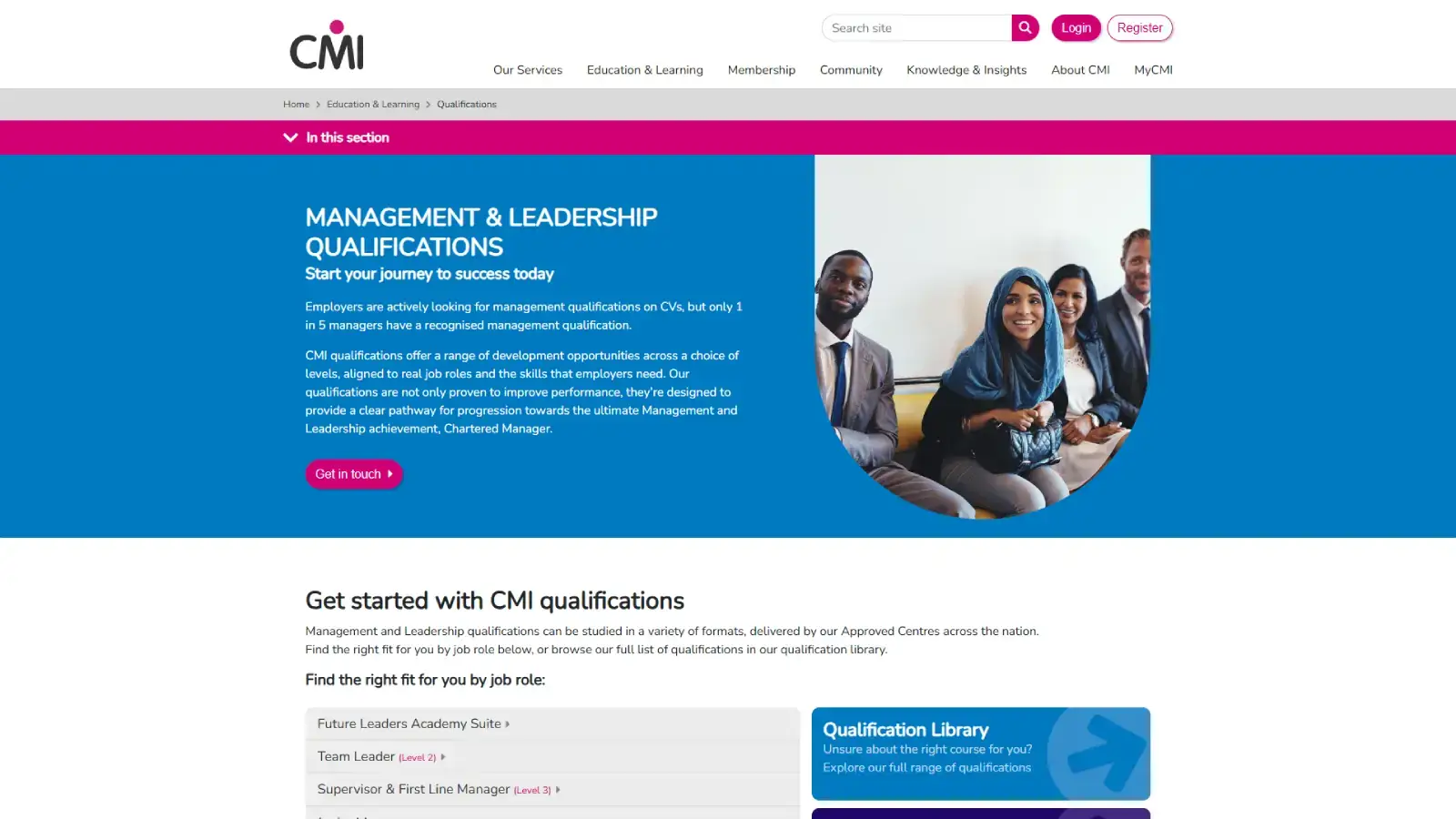
CMI offers management and leadership qualifications across different career stages, including team leaders, supervisors, junior managers, middle managers, senior managers and directors. Its qualifications are delivered through approved centres and can be provided in different learning formats.
Why choose CMI?
- Strong professional recognition.
- Management and leadership qualifications for different career levels.
- Qualifications range from introductory management through to senior leadership.
- Flexible delivery through approved centres.
- Professional development pathways.
- Routes towards Chartered Manager status.
- Suitable for both individuals and organisations.
CMI can be a good option for businesses that want a recognised management qualification alongside practical management development.
CMI Management Training & Qualifications
4. CIPD
Chartered Institute of Personnel and Development (CIPD) provides people-management and management development training for organisations and professionals.
Its learning programmes include management and people-management topics such as performance management, workforce planning, employee wellbeing, diversity and inclusion, team dynamics, coaching and consulting skills.
CIPD also provides programmes specifically aimed at new and aspiring people managers. Its Essential People Skills for Line Managers course covers management, leadership, communication, change management, coaching and motivation.
Why choose CIPD?
- Strong expertise in people management and HR.
- Courses designed around practical workplace management.
- Training for new and experienced managers.
- Covers employee lifecycle and people-management responsibilities.
- Includes performance, wellbeing, diversity and inclusion.
- Coaching and communication skills are included.
- Online and face-to-face options are available.
- Useful for organisations developing people-management capability.
CIPD is particularly suitable for organisations where management training has a strong people-management and HR focus.
CIPD training solutions
5. ILM
ILM is part of City & Guilds and specialises in leadership, management and coaching qualifications and training.
ILM provides management and leadership qualifications through approved training providers, employers and City & Guilds-approved centres. Its programmes are designed to develop managers and leaders and support improved employee productivity and business performance.
Why choose ILM?
- Specialist focus on leadership and management.
- Recognised management qualifications.
- Courses available at different levels.
- Leadership, coaching and mentoring options.
- Suitable for new, experienced and senior managers.
- Flexible training through approved providers.
- Suitable for both individuals and organisations.
ILM can be a strong choice for businesses looking for a structured management qualification with a focus on leadership, coaching and practical management skills.
ILM Leadership and Management Training
Why Is Management Training Important for UK Businesses?
Management training can help organisations build confident managers who are capable of supporting employees and achieving business objectives.
Developing effective leaders
Managers have a direct influence on employee performance, engagement and workplace culture. Training helps managers understand how to lead teams and adapt their management approach to different situations.
Improving communication
Managers regularly communicate with employees, colleagues, customers and senior leaders. Training can help them communicate clearly, provide constructive feedback and handle difficult conversations.
Improving employee performance
Managers need to set expectations, monitor performance and help employees improve. Performance management training can give managers practical techniques for setting objectives, conducting reviews and providing feedback.
Supporting employee wellbeing
Managers increasingly play an important role in supporting employee wellbeing. Training can help managers recognise workplace pressures, have appropriate conversations and signpost employees to relevant support.
Managing workplace conflict
Managers may need to resolve disagreements between employees or deal with difficult workplace situations. Conflict-management training can help managers approach these situations fairly and professionally.
Supporting organisational change
Businesses regularly introduce new technologies, processes, structures and working practices. Managers need to communicate change effectively and help employees adapt.
Meeting legal and organisational responsibilities
Managers may have responsibilities relating to health and safety, equality, employee rights, data protection and workplace conduct. Appropriate training helps them understand these responsibilities and apply organisational policies correctly.
The HSE also emphasises that managers and supervisors should understand their health and safety responsibilities and receive appropriate training and development.
What Topics Are Generally Covered in Management Training?
The exact topics depend on the course level and the responsibilities of the manager. However, most management programmes cover several core areas.
1. Leadership and Management
Managers learn the difference between managing and leading and how to develop an effective leadership style.
Topics can include:
- Leadership styles
- Management responsibilities
- Setting direction
- Building trust
- Leading by example
- Leadership behaviours
- Developing leadership confidence
2. Communication Skills
Effective communication is one of the most important management skills.
Training may cover:
- Active listening
- Verbal communication
- Written communication
- Giving and receiving feedback
- Difficult conversations
- Presentation skills
- Influencing and negotiation
- Communicating organisational objectives
3. Team Building and Team Management
Managers need to create effective teams and understand how employees work together.
Topics may include:
- Building effective teams
- Team roles
- Collaboration
- Delegation
- Trust
- Team motivation
- Managing different working styles
- Creating an inclusive team environment
4. Performance Management
Performance management training helps managers support employees and address performance issues appropriately.
It can include:
- Setting objectives
- Performance reviews
- Giving constructive feedback
- Identifying development needs
- Managing underperformance
- Recognising achievements
- Creating development plans
- Monitoring progress
5. Coaching and Mentoring
Managers often support employee development through coaching and mentoring.
Training may cover:
- Coaching techniques
- Asking effective questions
- Active listening
- Goal setting
- Providing feedback
- Supporting career development
- Building employee confidence
6. Motivation and Employee Engagement
Managers need to understand what helps employees perform effectively.
Training can cover:
- Motivation theories
- Employee engagement
- Recognition
- Reward
- Creating a positive working environment
- Understanding individual employee needs
- Building commitment
7. Conflict Management
Workplace disagreements can affect employee wellbeing and productivity.
Managers may learn how to:
- Identify potential conflicts.
- Understand different perspectives.
- Facilitate difficult conversations.
- Resolve disagreements.
- Remain impartial.
- Escalate issues appropriately.
- Prevent conflicts from becoming more serious.
8. Time and Priority Management
Managers often need to balance competing priorities.
Training may cover:
- Prioritising tasks.
- Delegating effectively.
- Managing workloads.
- Planning.
- Setting deadlines.
- Avoiding unnecessary meetings.
- Managing interruptions.
- Supporting team productivity.
9. Change Management
Managers play an important role when organisations introduce changes.
Training can cover:
- Understanding organisational change.
- Communicating change.
- Managing resistance.
- Supporting employees through transitions.
- Maintaining productivity.
- Managing uncertainty.
- Building employee engagement during change.
10. Decision-Making and Problem-Solving
Managers regularly need to make decisions and solve workplace problems.
Topics may include:
- Identifying problems.
- Analysing information.
- Evaluating options.
- Risk assessment.
- Decision-making techniques.
- Critical thinking.
- Implementing solutions.
- Reviewing outcomes.
11. Equality, Diversity and Inclusion
Managers should understand how to create fair and inclusive workplaces.
Training may cover:
- Equality and diversity.
- Inclusive leadership.
- Unconscious bias.
- Discrimination.
- Harassment.
- Reasonable adjustments.
- Inclusive recruitment.
- Managing diverse teams.
12. Employee Wellbeing
Managers can have an important role in supporting employee wellbeing.
Training may cover:
- Workplace wellbeing.
- Stress awareness.
- Mental health conversations.
- Workload management.
- Preventing burnout.
- Supporting employees appropriately.
- Signposting to professional support.
13. Health and Safety Responsibilities
Managers and supervisors may have responsibilities for workplace health and safety.
Training can include:
- Identifying workplace hazards.
- Risk assessment.
- Safe working practices.
- Incident reporting.
- Emergency procedures.
- Employee responsibilities.
- Health and safety policies.
- Monitoring workplace safety.
The HSE states that employers must provide workers with appropriate information, instruction, training and supervision, and managers have responsibilities for implementing effective health and safety arrangements.
Relevant UK Legislation for Management Training
There is no single piece of legislation that requires every manager in the UK to complete a generic “management training course”. However, managers may have responsibilities under several areas of UK employment, equality, health and safety and data protection law.
Training should therefore reflect the manager’s role and the legal responsibilities relevant to the organisation.
Health and Safety at Work etc. Act 1974
The Health and Safety at Work etc. Act 1974 is the main health and safety legislation in Great Britain.
Managers may have responsibilities for implementing workplace health and safety arrangements and ensuring employees understand relevant procedures. The HSE states that employers have duties to protect workers and others affected by their activities.
Management of Health and Safety at Work Regulations 1999
These regulations require employers to have arrangements for effective planning, organisation, control, monitoring and review of health and safety measures.
Managers who supervise employees or workplace activities may therefore need appropriate health and safety training.
Equality Act 2010
The Equality Act 2010 provides protection against discrimination, harassment and victimisation in areas including employment.
Management training can help managers understand their responsibilities around:
- Recruitment
- Promotion
- Performance management
- Workplace conduct
- Reasonable adjustments
- Discrimination
- Harassment
- Equality and inclusion
Employment Rights Act 1996
The Employment Rights Act 1996 is an important part of UK employment law and covers a range of employment rights.
Managers may need awareness of relevant employment rights when dealing with issues such as contracts, disciplinary procedures, grievances, dismissal and other employment matters.
Data Protection Act 2018 and UK GDPR
Managers often handle employee and customer information. Training may therefore cover data protection principles, confidentiality, secure information handling and appropriate use of personal data.
Employment Relations Act 1999
This legislation includes provisions relating to employment relations, including trade union recognition and workplace representation. Managers may encounter responsibilities involving employee representatives and consultation.
Working Time Regulations 1998
Managers may need awareness of working-time requirements, including working hours, rest breaks and annual leave, particularly when planning employee schedules and workloads.
Whistleblowing Legislation
Managers may receive concerns from employees about wrongdoing within an organisation. Training can help managers understand how to respond appropriately and follow internal whistleblowing procedures.
The Public Interest Disclosure Act 1998 provides legal protection for qualifying workers who make certain protected disclosures.
Choosing the Right Management Training
The best management course depends on the employee’s current experience, responsibilities and development goals.
Businesses should consider:
- Whether the learner is an aspiring, new or experienced manager.
- The size and structure of the team.
- The manager’s industry and responsibilities.
- Whether people-management skills are the main priority.
- Whether leadership or strategic management skills are required.
- Whether a recognised qualification is important.
- Whether the organisation requires bespoke training.
- Online, classroom, virtual or blended learning requirements.
- Whether managers need compliance-related training.
- How training will be evaluated after completion.
For example, a new team leader may benefit from fundamental management and communication training, while an experienced manager may require advanced leadership, strategic management or coaching development.
Businesses should also consider practical application. Effective management training should not simply provide theoretical information; managers should have opportunities to practise communication, decision-making, feedback, coaching and problem-solving in realistic workplace situations.
Summary
Management training plays an important role in helping UK businesses develop capable managers and effective leaders. It can improve communication, employee performance, team engagement, decision-making and organisational performance while helping managers understand their responsibilities towards employees.
Aleido is a strong choice for organisations looking for scalable digital management training, particularly its Fundamental Management Skills suite. Day One Technologies is well suited to organisations looking for bespoke, scenario-based e-learning and “Learning by Doing” experiences.
CMI, CIPD and ILM provide further options for organisations and individuals looking for recognised management, leadership and people-management development. CMI and ILM are particularly useful where a recognised management qualification is required, while CIPD is a strong option for organisations with a focus on people management and HR.
The most effective management training should be aligned with the organisation’s objectives, the manager’s responsibilities and the legal and operational requirements of the workplace.
Note: UK employment and health and safety requirements can differ between England, Wales, Scotland and Northern Ireland. Organisations should check the legislation applicable to their location and sector and obtain appropriate professional advice where necessary.